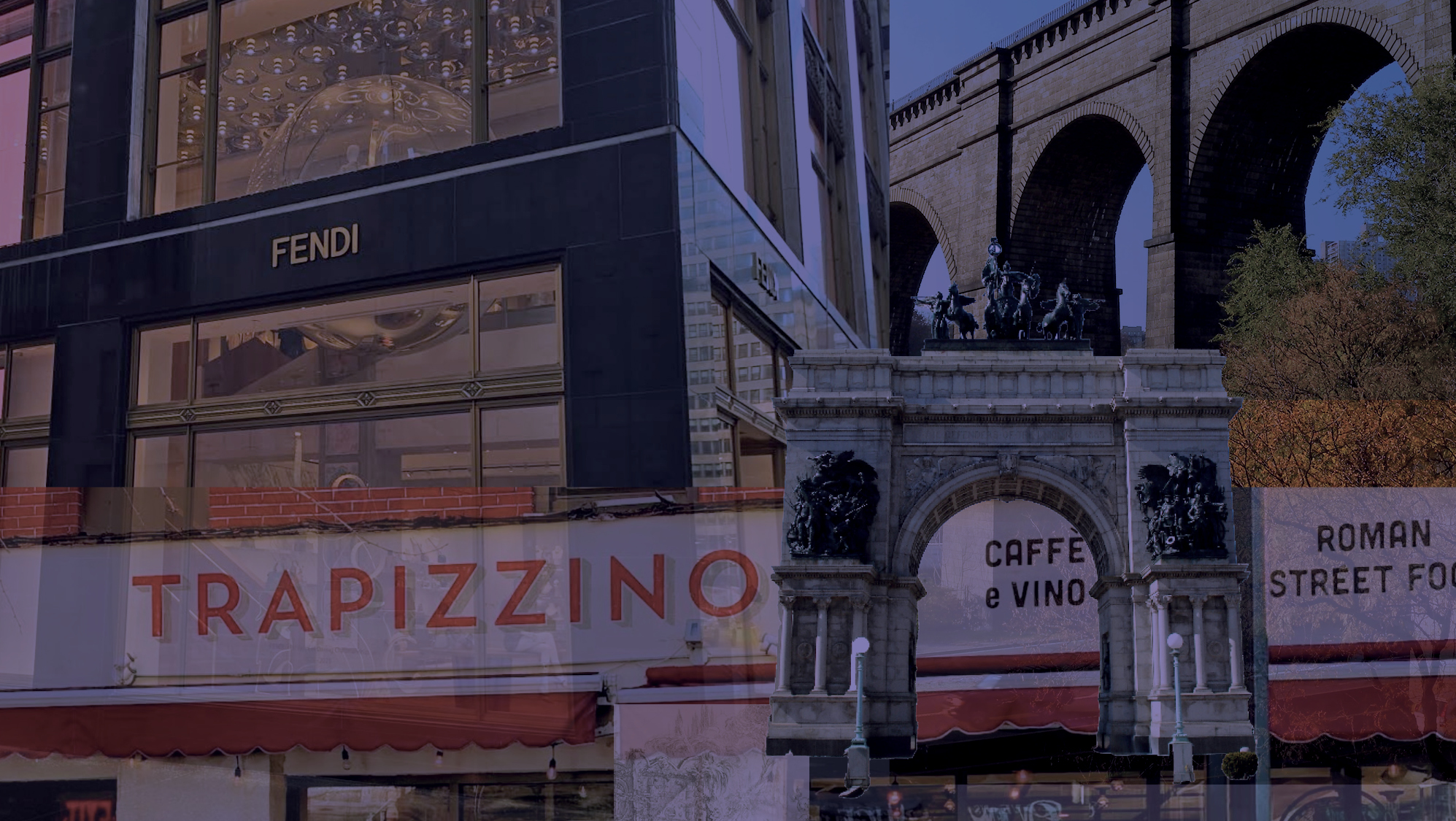
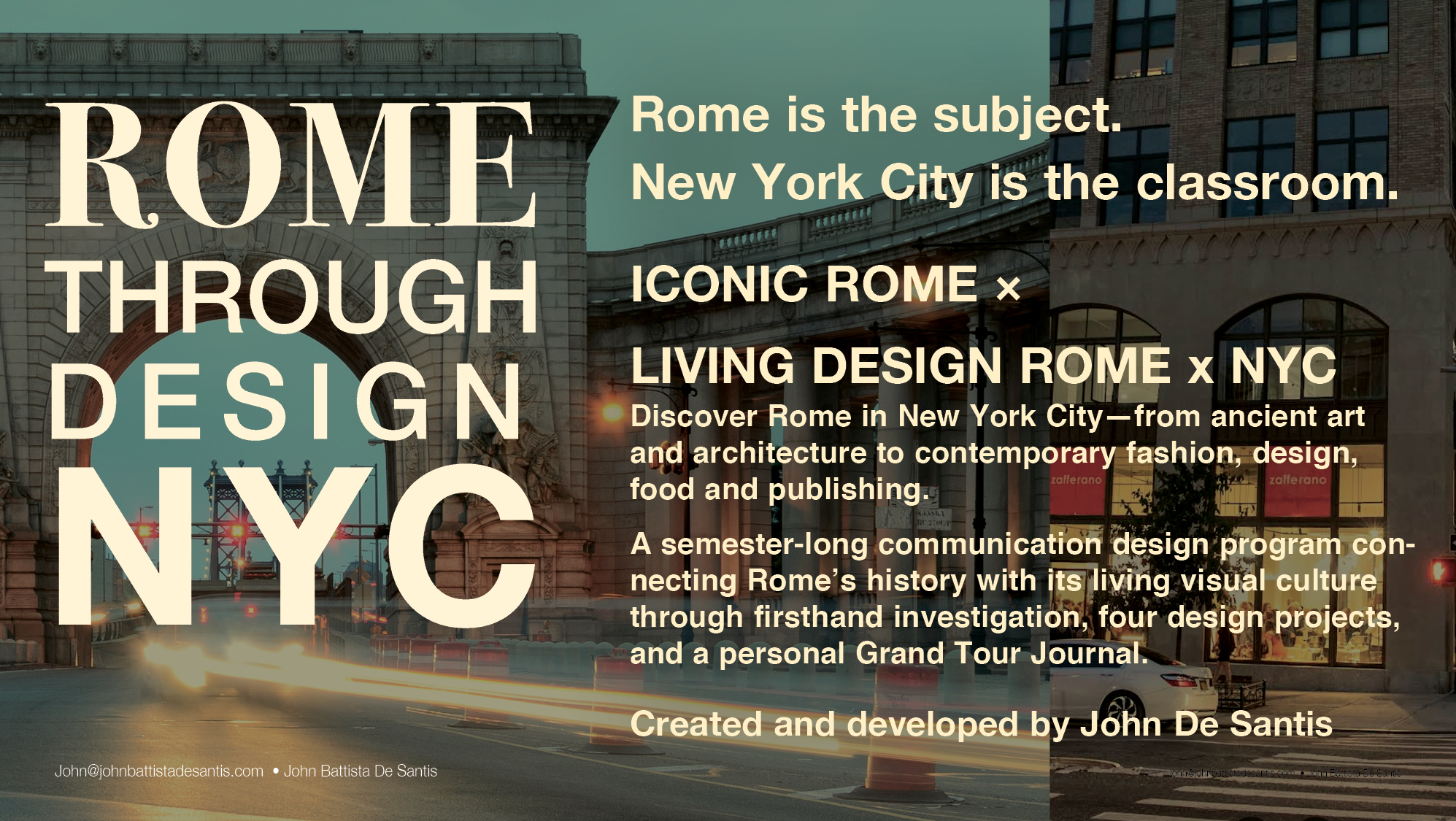
Rome is the subject.
New York City is the classroom.
Stand beneath a triumphal arch. Study an original Roman portrait. Examine a Piranesi print. Read a Fendi storefront. Take the subway and question every sign along the way.
Rome Through Design: New York City is a program I developed to connect design history with places students investigate firsthand—and turn those discoveries into original design work. New York’s museums, monuments, architecture, publishing, products, fashion, and food become material for looking, questioning, researching, and making. Students examine who created what they see, whom it addresses, and how it communicates.
Available as a full-semester elective, shorter summer program, guest lecture, lecture with a guided field visit, or hands-on workshop. Topic, length, and scope can be developed with the department.
Explore Rome Through Design: New York City Research Board →
Iconic Rome × Living Design Rome × NYC
Original Roman objects at the Metropolitan Museum of Art introduce ancient materials, images, and lettering. Washington Square Arch and Lower Manhattan’s civic architecture reveal how later generations used classical forms to communicate authority, memory, and public identity.
Centre 360 and the Manhattan Bridge Arch and Colonnade take the investigation into the skyline and streets. Church interiors and the Villard Houses introduce Renaissance and Baroque architecture. High Bridge and the Croton water system connect infrastructure with public life. The Morgan, NYPL, and Rizzoli open up Rome through prints, books, and publishing.
Contemporary Rome enters through Bulgari, Fendi, Valentino, and Brioni—their typography, identities, storefronts, and presentation to a New York audience. A subway journey becomes an investigation of maps, signs, transfers, and passenger decisions, compared with Rome’s transit systems.
Broader Italian examples extend the research into lighting at Artemide, furniture at Kartell, paper at Il Papiro, ceramics at Ginori, and design and engineering through Ducati, Lamborghini, and Dainese. Food, menus, packaging, and short Roma NYC Pop-Ups bring everyday Italian culture into the experience.
Students distinguish original Roman material, documented historical adaptations, and visual comparisons—and explain those relationships with evidence.
From Field Research to Design Work
My teaching connects history, design principles, creative process, and practical skills. Students photograph, sketch, write, compare, and research what they encounter. Their Grand Tour Journal becomes the source for four connected design projects.
Who Used Rome, and Why?
Investigate a New York monument or building: who commissioned it, why Roman references were chosen, and what they communicated. Develop an illustrated case study supported by evidence.
Rome on Paper: Piranesi / NYC Reinterpreted
Study Piranesi’s vision of Rome and create an original graphic interpretation of New York using firsthand photographs and sketches.
Rome Today: Branding, Fashion, and Wayfinding
Investigate contemporary identity through storefronts, typography, and a subway journey. Develop a Rome–NYC graphic mashup grounded in that research.
Iconic Rome / Living Rome / NYC
Author and design an eight-page zine connecting field observations and historical sources through writing, typography, images, and editorial design.
The fifteen-week model includes ten professor-led field investigations, classroom teaching, studio work, critique, and revision. Il Mio Giro gives each student an independent investigation chosen from thirty listed locations, with room to pursue personal interests and contribute discoveries to the Journal.
The Mobile Field Guide
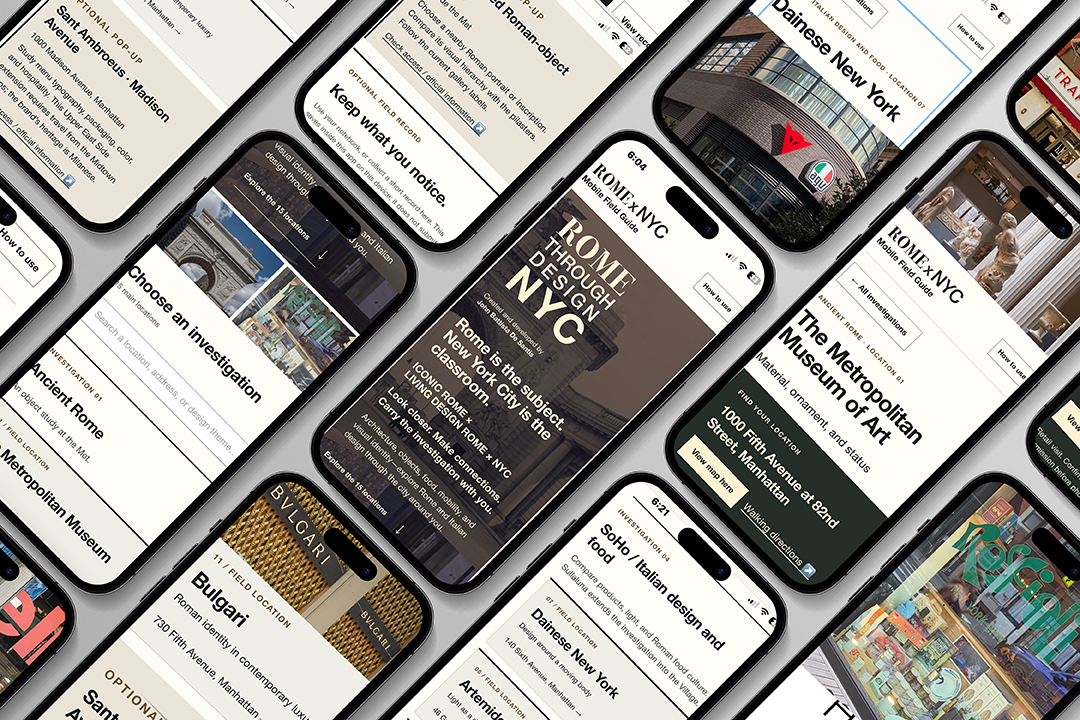
I am developing a Rome Through Design Mobile Field Guide, a web-based app bringing maps, site information, Rome and Italy connections, and observation prompts together on students’ phones. Planned tools for saving photographs and notes will support field research alongside their notebooks and connect observations to design work.
Rome Through Design: Lectures, Field Visits & Workshops
The program draws from growing research into hundreds of locations and historical and contemporary design references. A guest lecture can focus on Roman lettering and monuments, Piranesi and publishing, or contemporary branding and wayfinding. A lecture with a guided visit takes the discussion into New York’s museums and streets. A hands-on workshop turns observations into a design exercise. A summer program combines visits with studio work; the full semester develops the research through four projects and the Grand Tour Journal.
Topic, length, and scope can be developed to suit your students and department. A fully developed syllabus is available for review, including the fifteen-week schedule, field investigations, project briefs, assessment, independent investigation choices, and categorized location references.